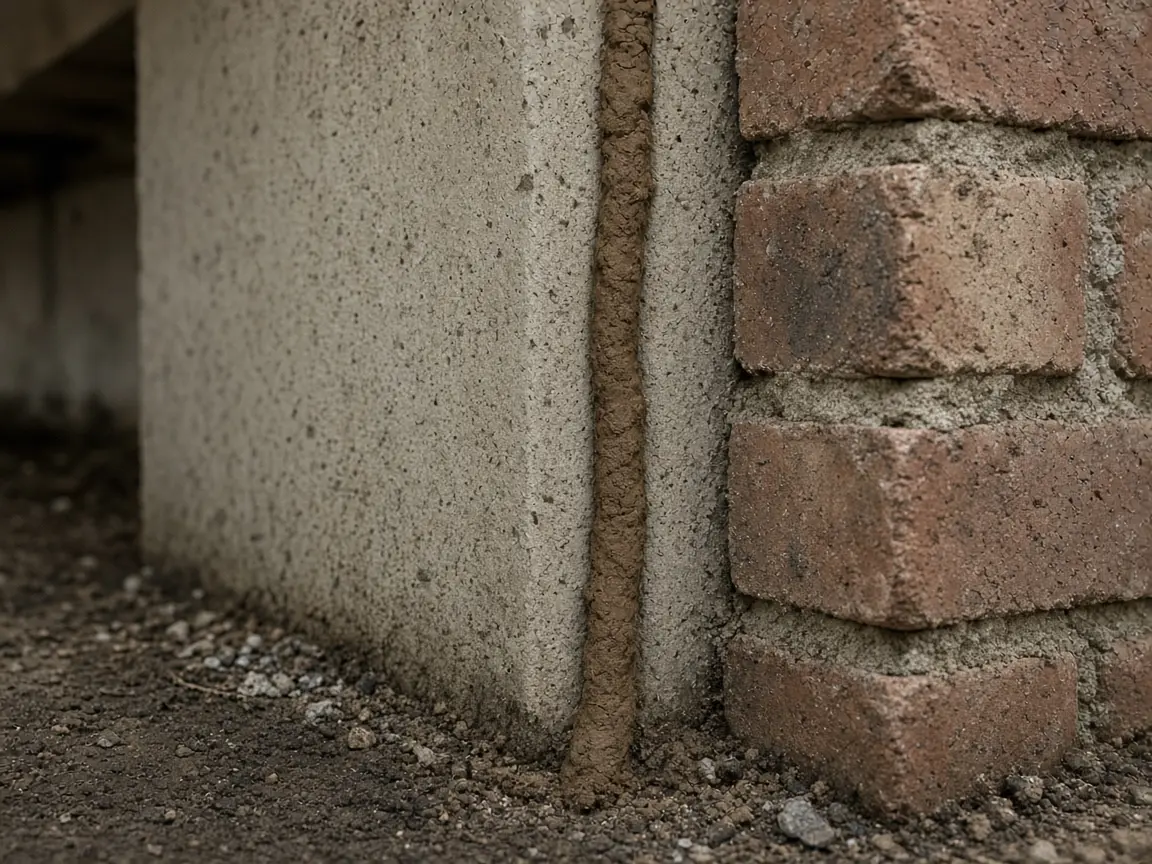
Eastern subterranean termites live in the soil and reach wood through shelter tubes, cracks, and wood that touches the ground. They are the termite this page discusses for Fayette County and the surrounding Bluegrass.
Drywood termites, which leave hard pellets, are not the default finding in these houses. A pellet-like pile in an attic still has to be identified. It might not be termites at all.
Swarmers, tubes, and damaged wood
Spring swarmers on a windowsill mean reproductive termites left a colony nearby. They do not map the damage.
Wings that are equal in length, a straight waist, and straight antennae help separate them from ant swarmers, which have a pinched waist and unequal wings.
Save intact insects if you can. Mud tubes on a foundation, a pier, or an expansion joint are stronger structural evidence.
Old tubes can remain after activity stops, so a tube is examined, not just photographed. Soft wood, blistered paint, and mud inside a gallery support the finding. A water stain alone does not.
Carpenter ants leave cleaner galleries and sawdust-like frass, and they are covered on the ant page.
What an inspection includes
The exterior walk looks at soil grade, mulch and siding contact, porch additions, crawl-space hatches, and piers. In older Lexington limestone and brick houses, the basement and the crawl space are often the story.
In slab houses at Hamburg or similar growth areas, the slab edge, the garage, and any addition matter. Moisture is recorded because leaks and poor drainage keep conditions favorable even after a treatment.
The inspector should say what was accessible and what was not. A locked crawl space is an incomplete inspection, not a clear report.
Treatment is a separate decision
Inspection and treatment are different purchases. A clear inspection can end with monitoring and a repair of wood-to-soil contact.
A treatment proposal should describe the category of work in ordinary language, the area of the structure included, and what follow-up or monitoring is actually offered.
The price, any bait layout, and any liquid application are set in the written proposal after the inspection. It does not promise that a house is termite-proof after one visit.
Kentucky structural pest control licensing applies to this work. Verify any license number with the Kentucky Department of Agriculture. This page does not display one.
If you are comparing proposals, compare the diagram of what was found, not only the monthly figure. A general pest route is not a termite treatment. Do not treat those as the same product.
Termites around Lexington homes
Eastern subterranean termites live in the soil across central Kentucky, and swarms show up in spring around foundations, windows and doors.
Housing includes brick and limestone homes near downtown and Chevy Chase, student rentals around the University of Kentucky, newer subdivisions on the south and east sides, and horse farms and rural homes on the county's edges.
Writing down where termites were seen near Hamburg, including the hose bib, makes the Lexington visit shorter and more exact.
Which termites are common around Lexington
Different species need different answers. Around Lexington our technician will usually be looking for:
- Writing down where termites were seen near Hamburg, including the eave gap, makes the Lexington visit shorter and more exact.
What a termite inspection covers
Termites around Tates Creek corridor follow the way the house is built, and the door threshold is one of the first places checked.
- Near Beaumont, termites turn up at the attic hatch before they turn up in the main rooms.
- A Lexington home with termites at the crawl-space vent needs that spot named when you call, so the visit starts in the right place.
- What decides the termites plan in Lexington is the building near Tates Creek corridor, and the meter box is on that list.
- Termites around Winchester follow the way the house is built, and the door threshold is one of the first places checked.
- Do not close up the expansion joint before the inspection for termites in Lexington, or the useful evidence is gone.
- Writing down where termites were seen near Georgetown, including the eave gap, makes the Lexington visit shorter and more exact.
Termites in Lexington: what people ask.
Does one sighting of termites near Richmond mean a bigger problem?
The time of year in Lexington changes the pressure, and termites near Beaumont are still confirmed at the window well.
If you have seen termites near Ashland Park, leave the soffit gap as you found it and photograph it.
Does one sighting of termites near Winchester mean a bigger problem?
Writing down where termites were seen near Winchester, including the eave gap, makes the Lexington visit shorter and more exact.
Does one sighting of termites near downtown Lexington mean a bigger problem?
What decides the termites plan in Lexington is the building near Richmond, and the meter box is on that list.
Why do termites keep returning in Lexington?
In Lexington, termites near Richmond are traced from the ridge vent, not from a product chosen before anyone looks.
A Lexington home with termites at the utility chase needs that spot named when you call, so the visit starts in the right place.
What does an inspection for termites look for near Georgetown?
The time of year in Lexington changes the pressure, and termites near Ashland Park are still confirmed at the window well.
Does one sighting of termites near Chevy Chase mean a bigger problem?
It depends on the method, the termite species and the conditions around the house.
Soil barriers and bait systems are usually backed by monitoring and sometimes a warranty. Ask exactly what is covered and what renewal involves.
Why do termites keep returning in Lexington?
Not effectively. Over-the-counter products seldom reach the colony, and a partial treatment can push termites to another part of the house. A professional should inspect first.
What should I have ready for a visit in Lexington?
Eastern subterranean termites live in the soil across central Kentucky, and swarms show up in spring around foundations, windows and doors.
Near Beaumont, termites turn up at the attic hatch before they turn up in the main rooms.