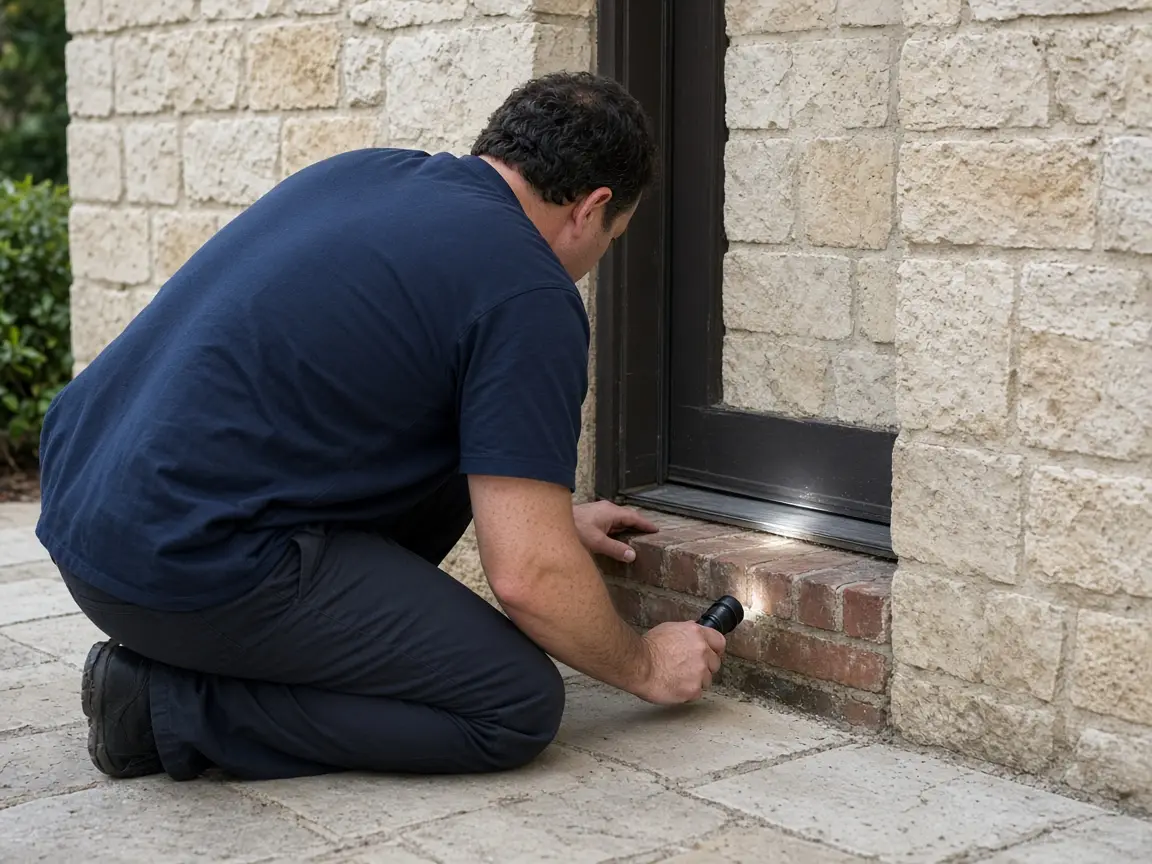
Book an inspection when you have swarmers and no tubes, a noise you cannot place, a crawl space you have never entered, or a real-estate question that needs a look rather than a spray.
Book it when a previous treatment did not match the pest you still see.
At booking we settle whether the address is served, who can let our technician in, and whether pets or a business schedule constrain the time.
What is looked at
The exterior includes the foundation, door sweeps, utility lines, vents, and wood or mulch against the building. The interior follows the evidence you reported and the places that pest usually uses.
Ants, cockroaches, rodents, termites, and bed bugs do not share one checklist. The inspector should tell you what was accessible.
A hatch that cannot be opened is a limit on the report, and the report should say so.
Findings are written in ordinary language: what was seen, where, what else it could be, and what is proposed next.
What decides the general pests plan in Lexington is the building near Hamburg, and the meter box is on that list.
A clear photo can rule some pests in or out. It cannot measure a colony, see through a wall, or identify a brown recluse from a violin-shaped mark.
It cannot tell a water stain from termite damage. Bring the photo anyway. Then expect the visit to go past it. Store products already applied should be mentioned, because they change what is visible.
After the findings
You can stop at the inspection. Treatment, exclusion, and monitoring are separate approvals. If a fee is charged for the inspection itself, it should be stated before anyone is on the way.
A free look that exists only to force a contract is still a sales tactic, and you can end the conversation after the findings.
Kentucky licensing rules still apply to structural pest control recommendations that turn into an application. This page does not publish a license number.
Continue to the pest page that matches the finding.
What an inspection is for
The inspection settles what the problem is, how widespread it is and what lets it continue. Without those answers, any treatment is a guess.
Local conditions are part of the picture in Lexington.
Lexington has four distinct seasons with cold winters, warm humid summers and a long spring, so pests move indoors in fall and surge again as the ground warms.
The inspection step by step
Expect our technician to work through the property in their own order. In and around Lexington, that typically covers:
- The time of year in Lexington changes the pressure, and general pests near Ashland Park are still confirmed at the window well.
- If you have seen general pests near Richmond, leave the gable vent as you found it and photograph it.
- Writing down where general pests were seen near Winchester, including the eave gap, makes the Lexington visit shorter and more exact.
- Near Tates Creek corridor, general pests turn up at the dryer vent before they turn up in the main rooms.
- What decides the general pests plan in Lexington is the building near Hamburg, and the meter box is on that list.
It is reasonable to ask to be shown each finding. Seeing it in place makes the proposal that follows easier to understand.
Getting ready
- Homes around Winchester get the general pests inspection at the sill plate first, because that is where the activity usually starts.
- Near Ashland Park, general pests turn up at the attic hatch before they turn up in the main rooms.
- Homes around Hamburg get the general pests inspection at the bath trap first, because that is where the activity usually starts.
- A Lexington home with general pests at the utility chase needs that spot named when you call, so the visit starts in the right place.
- If you have seen general pests near Winchester, leave the gable vent as you found it and photograph it.
- General pests around Tates Creek corridor follow the way the house is built, and the door threshold is one of the first places checked.
Do not worry about getting it all right. An honest 'I do not know' is more useful than a guess.
What to note down
A little record keeping makes a visit much more useful, especially for a problem that comes and goes.
- A sketch or a few photos of the layout, so our technician can see the property before arriving.
- Any earlier inspection report, receipt or warranty for the property.
- Anything already tried, the product names and the dates.
- A note of when and where each sign appears, including the time of day.
- The names of neighbors or tenants who have had the same problem.
The limits of an inspection
Be wary of certainty. Much of a building cannot be seen, so a visit that finds nothing is not proof that nothing is there, and a photograph alone cannot settle what a problem is.
Where the evidence is thin we say so, explain what would settle the question and tell you what to watch for in the meantime.
A plan that depends on a certainty the visit could not give you is a reason to ask for a second opinion, whoever makes it.
After the visit
By the end of the visit you should understand what was found, the basis for it, what is proposed and what it costs. In writing, expect:
- Homes around Chevy Chase get the general pests inspection at the sill plate first, because that is where the activity usually starts.
- The method and, where relevant, the products or parts to be used.
- The number of visits and what each one covers.
- Who is carrying out the work and the license they hold.
- The problem found and the evidence for it.
- The areas included and the areas not included.
If any of these are missing, ask for them. You are not obliged to agree on the day. Taking time to compare is normal.
Ask before you agree
- Is the price for this visit only, or for the whole plan?
- What can I do myself, and what should I leave to you?
- What is the problem, and what evidence did you find?
- Is your license current with the Kentucky Department of Agriculture, and can you give me the number?
- What do I need to do, and what should I keep away from children and pets?
- How did you rule out other possible causes?
- In Lexington, general pests near Versailles are traced from the garage-door sweep, not from a product chosen before anyone looks.
Ask them of anyone you are thinking of hiring, including us.