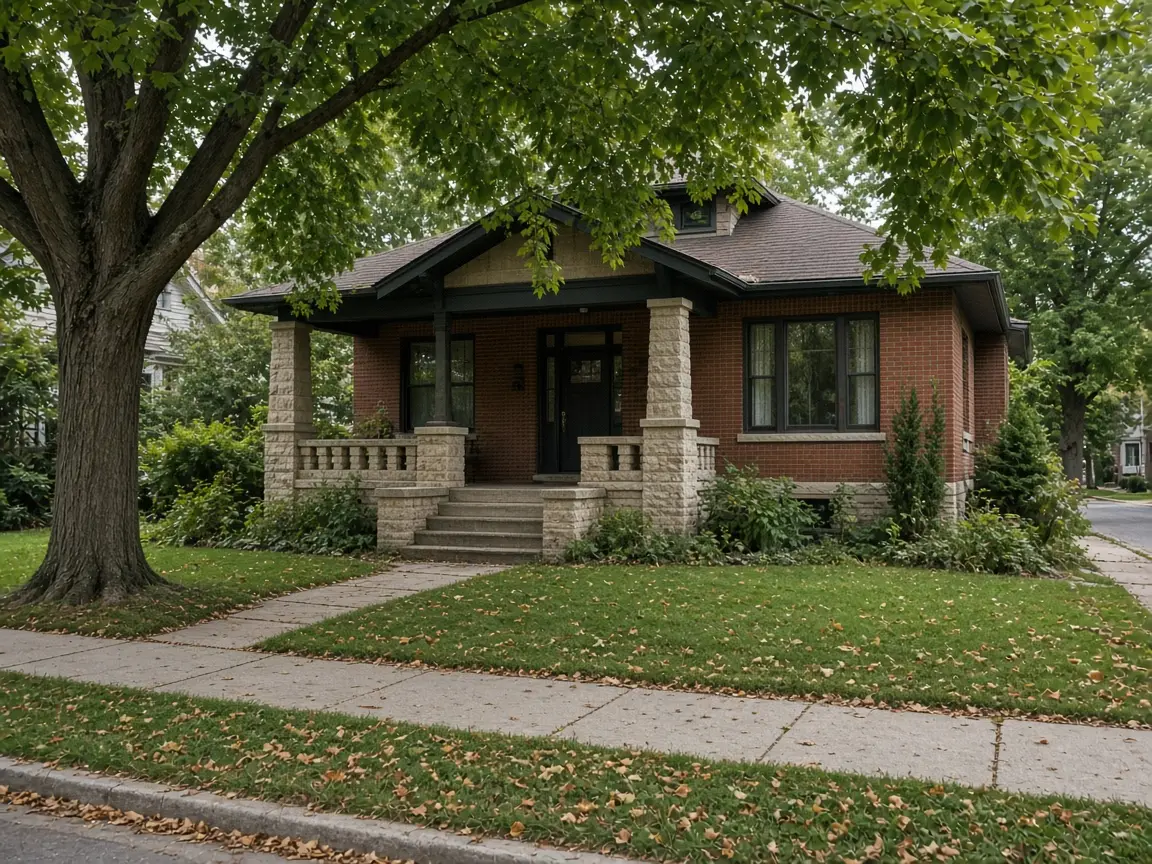
Home service covers houses, condos, and rentals when the person who can approve entry is identified. If you rent, the owner or manager often has to authorize interior work and any unit beyond yours.
Say that on the first call so the visit is not scheduled for a door nobody can open.
One visit or a route
A wasp nest, a single ant trail with an obvious exterior cause, or an inspection that finds no active pest can be a one-time job.
German cockroaches, bed bugs, rodents, and many recurring ant problems need a follow-up because eggs, hidden insects, or an open gap remain.
A recurring route is a choice for a house that wants a seasonal check, not a requirement invented to fill a calendar.
The agreement, if there is one, should list the pests included, the pests excluded, how often someone comes, and how you stop.
Termites, bed bugs, and wildlife should not be silently included or silently excluded.
What changes inside a Fayette County house
Basements and crawl spaces in older brick and limestone houses create different moisture and entry points than a slab house in a newer subdivision.
The same ant species can be a porch-column problem in Kenwick and a patio-irrigation problem in Hamburg. The inspector uses the building in front of them.
A plan copied from a different house style is a reason to ask for a rewrite. Preparation for children, pets, and aquariums is method-specific and is given for your visit.
Start with the pest page that matches what you see, or with the inspection if you are not sure treatment is the right purchase.
One-time visit or recurring service
People ask for residential pest control for two different reasons. Some have a specific problem and want it solved.
Others want to keep a home protected through the year. The two lead to different plans.
- A one-time visit suits a defined problem, such as an ant trail, a wasp nest or a rodent in the attic. The inspection, the treatment and any follow-up are agreed together.
- A recurring service suits a home that has had repeat problems, borders woodland, water or farmland or has an older structure with many gaps. It means regular visits of a set scope.
- A recurring service should still begin with an inspection, and each visit should record what was found and done.
Ask for the difference in writing. The scope of a one-time visit and the scope of a recurring plan should be clearly separate, and neither should be described as a promise of no pests.
What a first visit to a Lexington home covers
A first visit looks at the building as a whole, not just the room where you saw the problem.
- Near Ashland Park, household pests turn up at the dryer vent before they turn up in the main rooms.
- Writing down where household pests were seen near Chevy Chase, including the hose bib, makes the Lexington visit shorter and more exact.
- In Lexington, household pests near Tates Creek corridor are traced from the ridge vent, not from a product chosen before anyone looks.
- Near Ashland Park, household pests turn up at the dryer vent before they turn up in the main rooms.
- For household pests in Lexington, the visit starts at the pet door and then follows whatever that shows.
Housing includes brick and limestone homes near downtown and Chevy Chase, student rentals around the University of Kentucky, newer subdivisions on the south and east sides, and horse farms and rural homes on the county's edges.
A Lexington home with household pests at the utility chase needs that spot named when you call, so the visit starts in the right place.
A little preparation helps our technician work faster and makes the visit more useful.
- Writing down where household pests were seen near Beaumont, including the hose bib, makes the Lexington visit shorter and more exact.
- In Lexington, household pests near Tates Creek corridor are traced from the garage-door sweep, not from a product chosen before anyone looks.
- Writing down where household pests were seen near Nicholasville, including the eave gap, makes the Lexington visit shorter and more exact.
- The household pests check in Lexington covers the block fence and the stored firewood on the same walk-through.
- Do not close up the stored firewood before the inspection for household pests in Lexington, or the useful evidence is gone.
- The time of year in Lexington changes the pressure, and household pests near Beaumont are still confirmed at the window well.
If you are renting, tell the landlord or property manager about the problem as well. Many leases make them responsible for pest control, and a problem that affects neighboring units needs coordinated treatment.
Your questions about residential pest control.
Do I need a one-time visit or a recurring plan?
It depends on the problem and the property. One visit fits a one-off issue; a plan fits a home that keeps getting the same pests. Compare the two in writing.
What happens at a first visit to my home?
Expect an inspection of the exterior, entry points and wet areas, a discussion of the evidence and a written scope before any treatment.
How should I prepare my home for a visit?
In Lexington, household pests near Winchester are traced from the ridge vent, not from a product chosen before anyone looks.
Are visits safe for children, pets and people with allergies?
Safety depends on the product, the place and the label. Mention anyone sensitive before the visit and ask how long to keep people and pets away.
I rent my home. Who arranges pest control?
In many rentals the landlord or manager is responsible and may already have a pest control company.
Tell them in writing first. If you arrange it yourself, get their approval for any work in shared areas.
How long does a first visit take?
It depends on the size of the home and how easy it is to reach the attic, crawl space and outbuildings. Our technician should tell you what to expect when the visit is arranged.
What pests do Lexington homes see most?
People in Lexington most often ask about ants, cockroaches, rodents, termites and spiders.
Lexington has four distinct seasons with cold winters, warm humid summers and a long spring, so pests move indoors in fall and surge again as the ground warms.