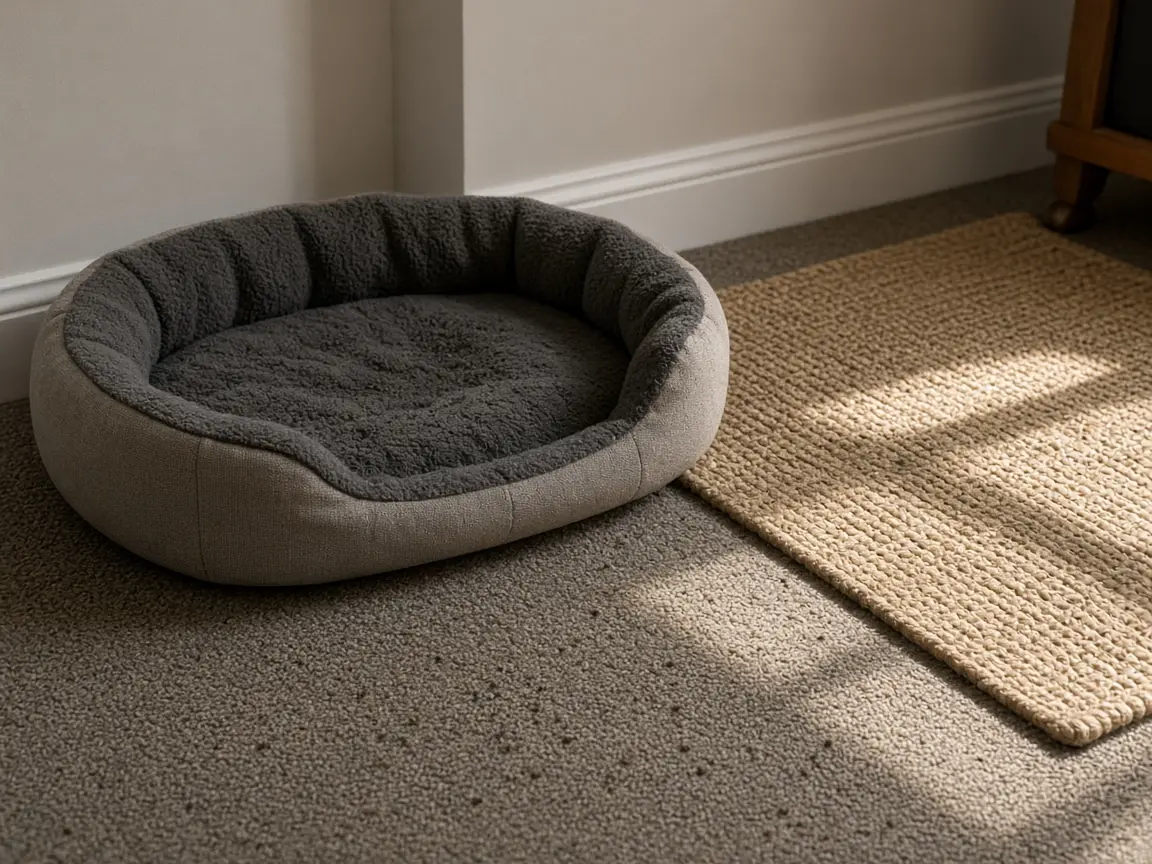
Fleas in a Lexington house are almost always tied to a pet, a visiting animal, or wildlife that has been using a crawl space or a porch.
This service treats the building and coordinates with what you do for the pet. It does not replace a veterinarian. If the animal has not been discussed with a vet, say that.
Treating the carpet and leaving an untreated pet in the house puts new adults back on the same rug.
Where the inspection goes
Pet beds, the edges of rugs, furniture the animal uses, and baseboards in those rooms are the indoor map.
Outside, shaded areas where a dog rests matter more than the open center of a sunny lawn.
A crawl space with animal activity is a different finding and may cross into wildlife, which is not offered here. Tell the inspector if raccoons or stray animals have been under the porch.
The indoor flea job and a wildlife job should not be blended into one vague price.
Follow-up
Vacuuming, washing bedding, and a return visit are normal parts of the plan because larvae keep developing after the adults you noticed are reduced.
The quote should say who does the laundry and vacuuming, which rooms are included, and whether a recheck is included.
This page does not give a product rate or a claim that the house is flea-free after one afternoon. Fish tanks and pet birds need to be mentioned before any application.
Re-entry instructions come from the label for the method used.
If the specks in the carpet are not fleas, the inspection should say so. Pepper-like droppings can be cockroaches.
See the cockroach page if the activity is in the kitchen rather than on the pet.
How fleas behave in Lexington
Fleas ride in on pets and wildlife and live in carpet, bedding and shaded yard areas, with populations peaking in warm, humid weeks.
Lexington has four distinct seasons with cold winters, warm humid summers and a long spring, so pests move indoors in fall and surge again as the ground warms.
That shapes when fleas show up and how long they stay.
Which fleas are common around Lexington
What decides the fleas plan in Lexington is the building near Richmond, and the meter box is on that list.
- Cat flea (Ctenocephalides felis): the flea found on most dogs and cats, which also bites people around the ankles.
What a flea inspection covers
A thorough flea inspection around Lexington covers:
- Near Hamburg, fleas turn up at the dryer vent before they turn up in the main rooms.
- Bites around ankles and lower legs, which show where the activity is greatest.
- Flea dirt, which looks like dark specks and turns red when wet, in bedding and along baseboards.
- The number of pets, how they are currently treated and how long the problem has been running.
- Pets and pet bedding, since most flea problems start on an animal and spread into the home.
- If you have seen fleas near Hamburg, leave the soffit gap as you found it and photograph it.
The methods used against fleas
The fleas check in Lexington covers the block fence and the stored firewood on the same walk-through.
- Repeat visits, because flea pupae can stay dormant for weeks and hatch after the first treatment.
- Treating shaded outdoor areas where pets rest and wildlife visits.
- Washing pet bedding and removable covers on a hot cycle.
- Indoor treatment that combines a product for adult fleas with one that stops eggs and larvae developing.
- Regular vacuuming of carpets, rugs and furniture, with the bag or canister emptied outside each time.
The fleas check in Lexington covers the block fence and the stored firewood on the same walk-through.
Where people go wrong with fleas
The fleas check in Lexington covers the dishwasher line and the expansion joint on the same walk-through.
- Skipping vacuuming and bedding because a spray has been applied.
- Overlooking wildlife under the house that keeps bringing fleas back.
- Stopping after one treatment. Pupae hatch for several weeks.
- Treating the home but not the pets, so the cycle restarts the same week.
- Using a flea bomb, which rarely reaches the places fleas live.
The fleas calendar for Lexington
Seasons in Lexington shape fleas activity:
- Fleas around Georgetown follow the way the house is built, and the door threshold is one of the first places checked.
In Lexington, fleas near Tates Creek corridor are traced from the ridge vent, not from a product chosen before anyone looks.
Do not close up the expansion joint before the inspection for fleas in Lexington, or the useful evidence is gone.
Questions about fleas in Lexington.
How did fleas get into my house if I have no pets?
Often from wildlife such as rats, opossums or stray cats around the property, or from a previous occupant. Dormant pupae in carpet can hatch long after the animals have gone.
Do I need to treat my pets and my home?
Yes, both. Adult fleas live on the animal, but eggs, larvae and pupae are in carpets, bedding and the yard. Treating only one side lets the cycle restart.
How long do fleas live in carpet?
Adult fleas live a few weeks, but pupae can remain dormant for months and hatch when they feel vibration and warmth.
Can fleas bite people?
Yes. Fleas bite people, typically around the ankles and lower legs, causing small itchy red bumps. Treating the source matters more than treating the bites.
Should I vacuum or steam clean for fleas?
Vacuuming carpets, rugs and furniture often helps, because it lifts eggs and larvae and stimulates pupae to hatch so treatment reaches them. Empty the vacuum outside each time.
Does the yard need flea control?
If pets or wildlife rest in shaded areas of the yard, yes. Fleas develop in shady, sheltered soil under decks and shrubs, so the plan should cover those areas.
Do flea bombs work?
Usually not. The mist settles on open surfaces while fleas develop in hidden places. Vacuuming, pet treatment and a professional's targeted plan do more.
What is different about fleas in Lexington?
Fleas ride in on pets and wildlife and live in carpet, bedding and shaded yard areas, with populations peaking in warm, humid weeks.
Local conditions change from season to season, so tell our technician when you first noticed the problem.